


“I need to stretch more.”
It’s one of the most common things people say to me, usually while rubbing a stiff lower back or a tight shoulder. And sometimes they’re right. But a lot of the time, what they actually need isn’t more flexibility. It’s more mobility.
They sound like the same thing. They’re not, and the difference matters.
Flexibility: how far can you stretch?
Flexibility is the ability of your muscles and connective tissues to lengthen. It’s passive. If you lie on your back and someone lifts your straight leg up as far as it’ll go, that’s a measure of your hamstring flexibility.
Think of a gymnast doing the splits or someone folding forward to put their palms flat on the floor. That’s flexibility.
Mobility: how much of it can you control?
Mobility is the ability to actively move a joint through its range of motion, with control and strength. It’s not just whether you can get into a position. It’s whether you can get there yourself, hold it, and move in and out of it safely.
Here’s a simple way to feel the difference. Lie on your back and pull one straight leg towards you with your hands, as far as it’ll go. That’s your flexibility. Now let go and try to lift that leg as high as you can using just your own muscles. The gap between the two is the part of your range you can’t yet control.
Mobility combines flexibility with strength, coordination and body awareness. And for most of us, it’s the more useful quality.
Flexibility gets you into a position. Mobility means you own it.
Why mobility matters more for most people
You don’t need to do the splits to live a great life. But you do need enough controlled range to do the things you want, comfortably and safely.
Good mobility lets you:
- Squat down to pick something up without your heels lifting or your back rounding
- Reach overhead to grab something off a high shelf without arching your lower back
- Turn to check your blind spot without your whole body twisting
- Get down on the floor and back up again easily
- Lift weights through a full range of motion with good technique
When you lack mobility, your body finds a way around it. If your hips are stiff, your lower back often picks up the slack. If your upper back doesn’t move well, your shoulders and neck work harder. Those compensations can lead to aches, niggles and poor technique over time.
And here’s the bit about flexibility that surprises people: having lots of passive range without the strength to control it isn’t always a good thing. Range you can’t control is range you can’t protect. That’s why mobility work focuses on strength at the end of your range, not just reaching further.
How to improve your mobility
The good news is that mobility responds well to regular practice. A few tips for building it.
Move through full ranges in your training. Squatting deeper, pressing overhead with control and doing lunges through a full range all build mobility. Strength training done well is mobility training. Done properly, lifting doesn’t make you stiff. Lifting badly, through tiny ranges, might.
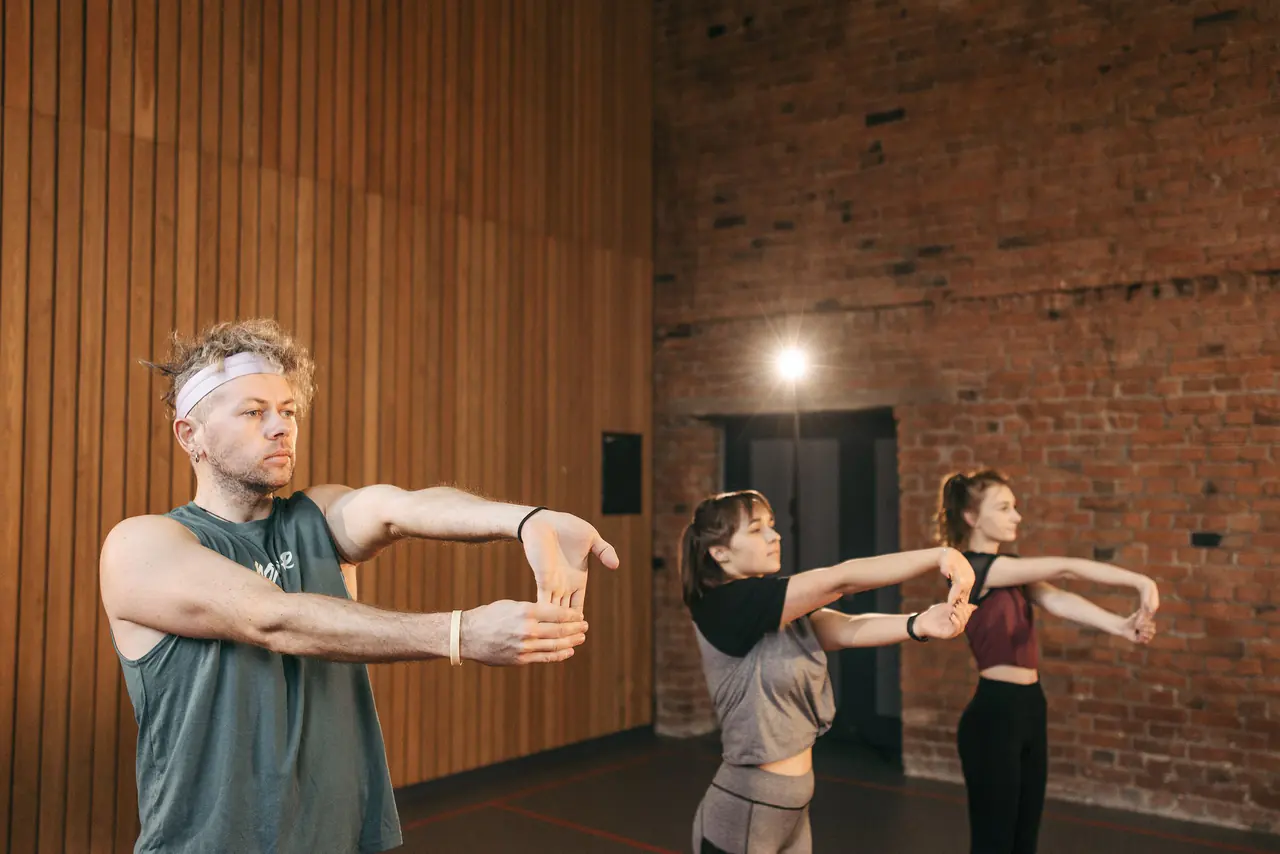
Use controlled, active movements. Slow joint circles, leg swings, hip rotations and thoracic spine rotations get your joints moving under your own control. These are perfect as part of a warm-up.
Strengthen the end range. Once you reach the edge of your range, hold it there actively. Lift that leg and keep it up for a few seconds. Hold the bottom of a squat. This teaches your body that the range is safe to use.
Stretch, but don’t rely on it alone. Static stretching still has a place. It can feel great, help you relax after training and gradually improve flexibility. Just pair it with active work so you can use the range you gain.
Little and often beats long and rare. Ten minutes most days will do far more than an hour once a month. Your body adapts to what you do regularly.
A quick daily routine
If you want somewhere to start, try this most days:
- Cat-cow on hands and knees: 8 slow reps
- Deep squat hold, holding something for balance if needed: 30 seconds
- Hip flexor lunge stretch with a slight squeeze of the back glute: 30 seconds each side
- Thoracic rotations on hands and knees: 8 each side
- Shoulder circles or band pull-aparts: 10–15 reps
It takes about five minutes, and you’ll feel looser and move better within a couple of weeks. Do it first thing in the morning, before a workout, or in front of the TV at night. The best time is whichever one you’ll actually stick to.
Our Mobility Moves class
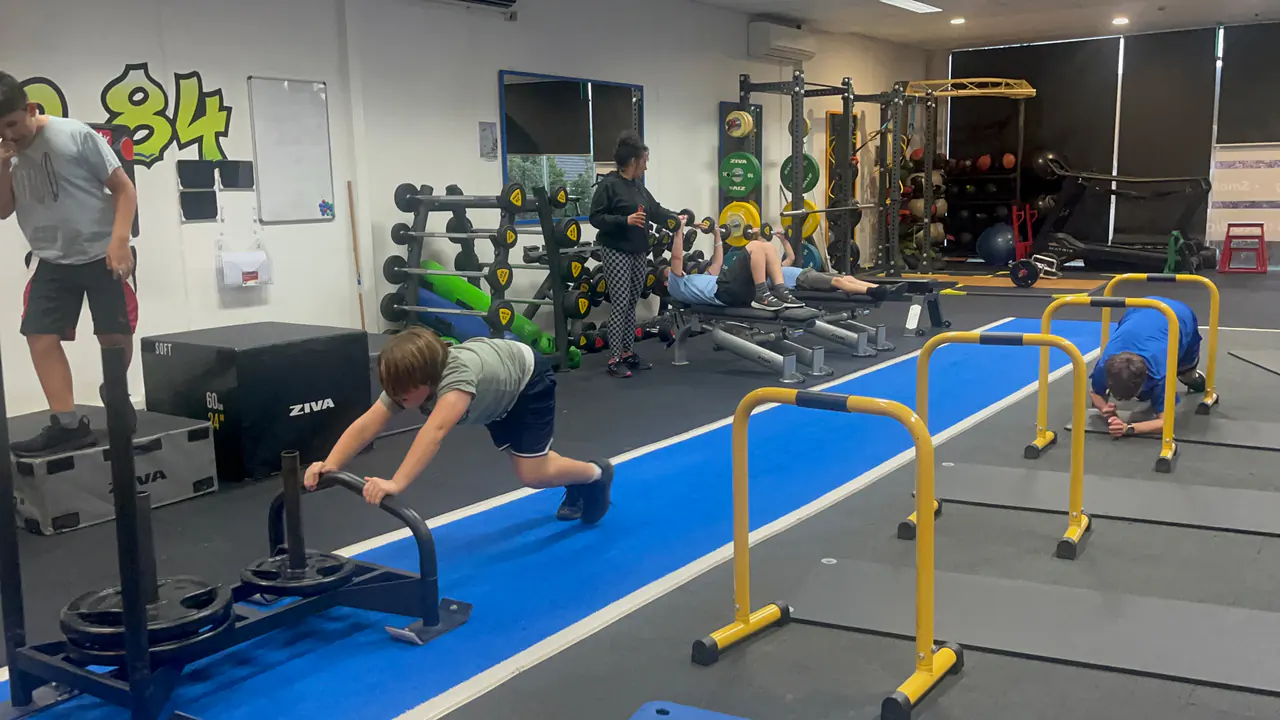
This is exactly why we run Mobility Moves at Studio 84. It’s a class dedicated to moving well, combining controlled mobility drills, active stretching and strength in end ranges. Members often tell us it’s the session that makes everything else feel better: their squats get deeper, their shoulders feel freer and their backs stop complaining.
If something feels genuinely painful rather than just tight, or you’ve got a joint that’s suddenly lost range, see your GP or a physio before pushing into it. Mobility work should feel like effort, not like pain.
Mobility also tends to slip as we get older, mostly because we stop using our full range. If you never squat deep, reach overhead or get down on the floor, your body quietly decides it doesn’t need to. Keep using it, and you keep it.
So next time you think you need to stretch more, ask yourself a better question: can I control the range I’ve already got? Build that, and you’ll move better for life.
For the other half of a body that moves well, read Your Core Is Not Your Six-Pack.