
When people tell me they want to work on their core, what they usually mean is they want a flat stomach or a six-pack. Then they lie down and start pumping out crunches until their neck hurts.
I understand the logic. But it misses what your core actually is and what it’s there to do.
What your core really is
Your six-pack muscle, the rectus abdominis, is just one part of your core. Think of your core more like a cylinder wrapped around your middle. It includes:
- The abs at the front
- The obliques down your sides
- A deep layer of muscle that wraps around you like a corset, called the transverse abdominis
- The muscles running up and down your spine
- Your diaphragm on top and your pelvic floor underneath
- Your glutes and hips, which connect it all to your legs
All of these work together as a team. When they do their job well, they create a stable, solid trunk that lets you transfer force between your upper and lower body. Every time you lift something, throw a punch, swing a golf club or carry a toddler, your core is the link in the middle.
Its job is to resist, not just to bend
Here’s the part most people miss. Your core’s most important job isn’t creating movement. It’s stopping unwanted movement.
When you carry a heavy bag in one hand, your core stops you leaning sideways. When you push a heavy door, it stops your lower back from arching. When you twist awkwardly to grab something from the back seat, it controls the rotation so your spine doesn’t take all the load.
That’s why crunches on their own don’t give you a strong, functional core. Crunches train your spine to bend forward. That has its place, but the bigger need in everyday life is a core that can keep you steady and strong under load.
A strong core isn’t one that can do a hundred sit-ups. It’s one that keeps your spine steady when life pushes and pulls you around.
Learning to brace
The foundation of core strength is learning to brace. It’s different from sucking your stomach in.
Try this: stand tall and imagine someone is about to poke you in the stomach. You naturally tighten around your whole middle, front, sides and back, without holding your breath or drawing your belly button to your spine. That’s bracing.
A good brace makes your trunk rigid, like a pressurised can. It protects your spine and gives you a stable base to push and pull from. Learning to brace during squats, deadlifts and presses is one of the most valuable things you can do in the gym.
Better core exercises
Instead of endless crunches, these build a core that actually works.
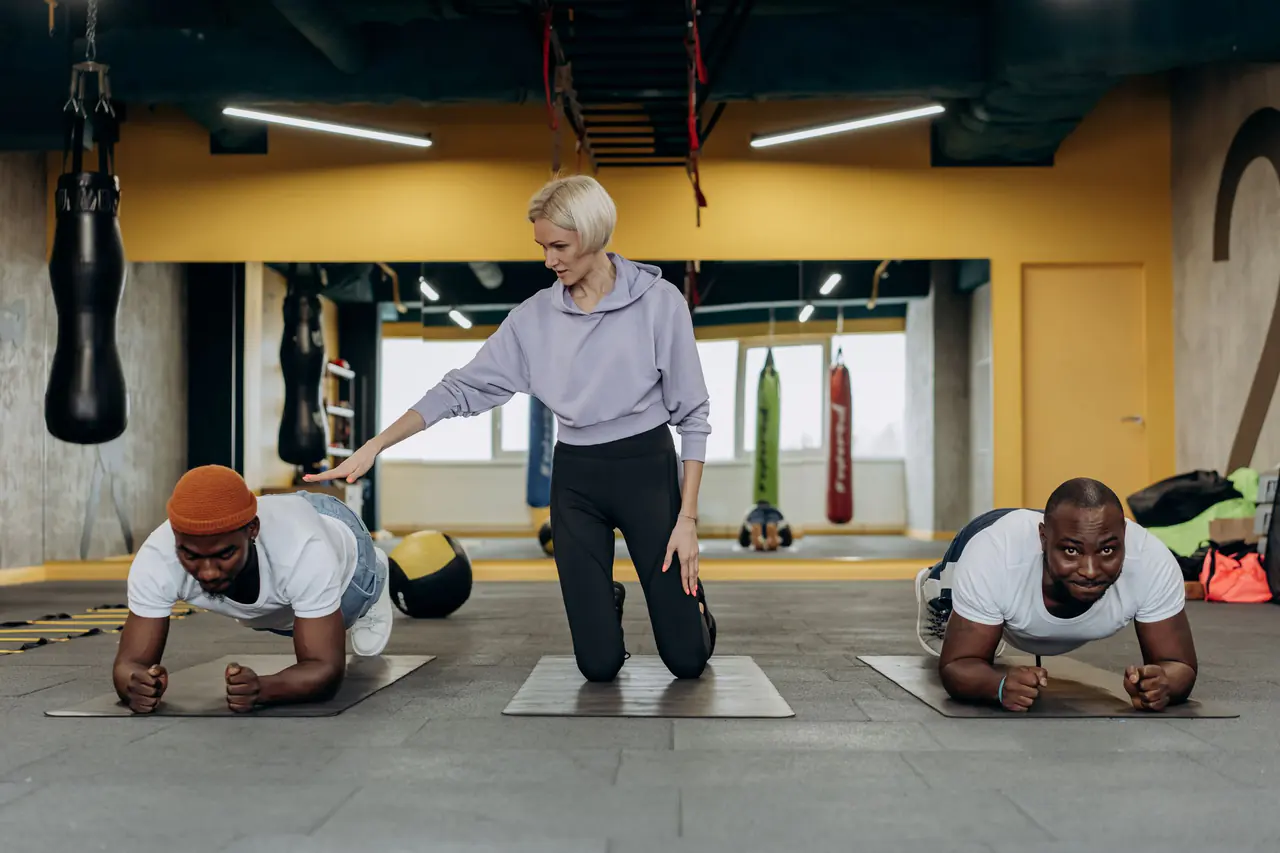
Planks. The classic for a reason. Hold a straight line from head to heels, brace your middle and squeeze your glutes. Quality beats duration. Thirty seconds of a genuinely tight plank beats three minutes of sagging hips. Side planks hit your obliques brilliantly too.
Dead bugs. Lie on your back with arms reaching up and knees bent at 90 degrees. Slowly extend the opposite arm and leg while keeping your lower back pressed gently into the floor. They teach you to keep your core stable while your limbs move.
Bird dogs. On hands and knees, extend one arm and the opposite leg without letting your hips rotate or your back sag. Great for control and for the muscles along your spine.
Pallof presses. Using a band or cable anchored to the side, hold it at your chest and press it straight out in front of you, resisting the pull trying to twist you. This is anti-rotation training at its best.
Loaded carries. Walk with a heavy weight in one or both hands. A one-handed suitcase carry is especially good, because your core has to work hard to stop you leaning.
The big lifts. Squats, deadlifts and overhead presses are some of the best core exercises around, because you have to brace hard to do them well. More on those in The Only Four Moves You Need.
And about that six-pack
I’ll be straight with you. Whether your abs are visible has much more to do with your body fat levels than with how many core exercises you do. You can have very strong abs hidden under a layer of fat, and that’s completely fine.
Visible abs come from a combination of consistent training, eating well, sleeping well and, frankly, genetics. Core exercises make the muscles stronger, but they don’t burn the fat sitting on top of them. You can’t spot-reduce your stomach with crunches, no matter what the infomercials promised.
So train your core for what it does, not what it looks like. A strong, stable trunk protects your back, improves your lifting and makes everyday life easier. That’s worth far more than a six-pack.
Don’t forget the pelvic floor
Your pelvic floor is part of the core team, and it deserves a mention. It works with your deep abdominals and diaphragm to manage pressure, especially when you lift, cough or jump. If you notice leaking, heaviness or discomfort when you exercise, that’s common but not something you just have to live with. A women’s or men’s health physio can help enormously.
Train it properly
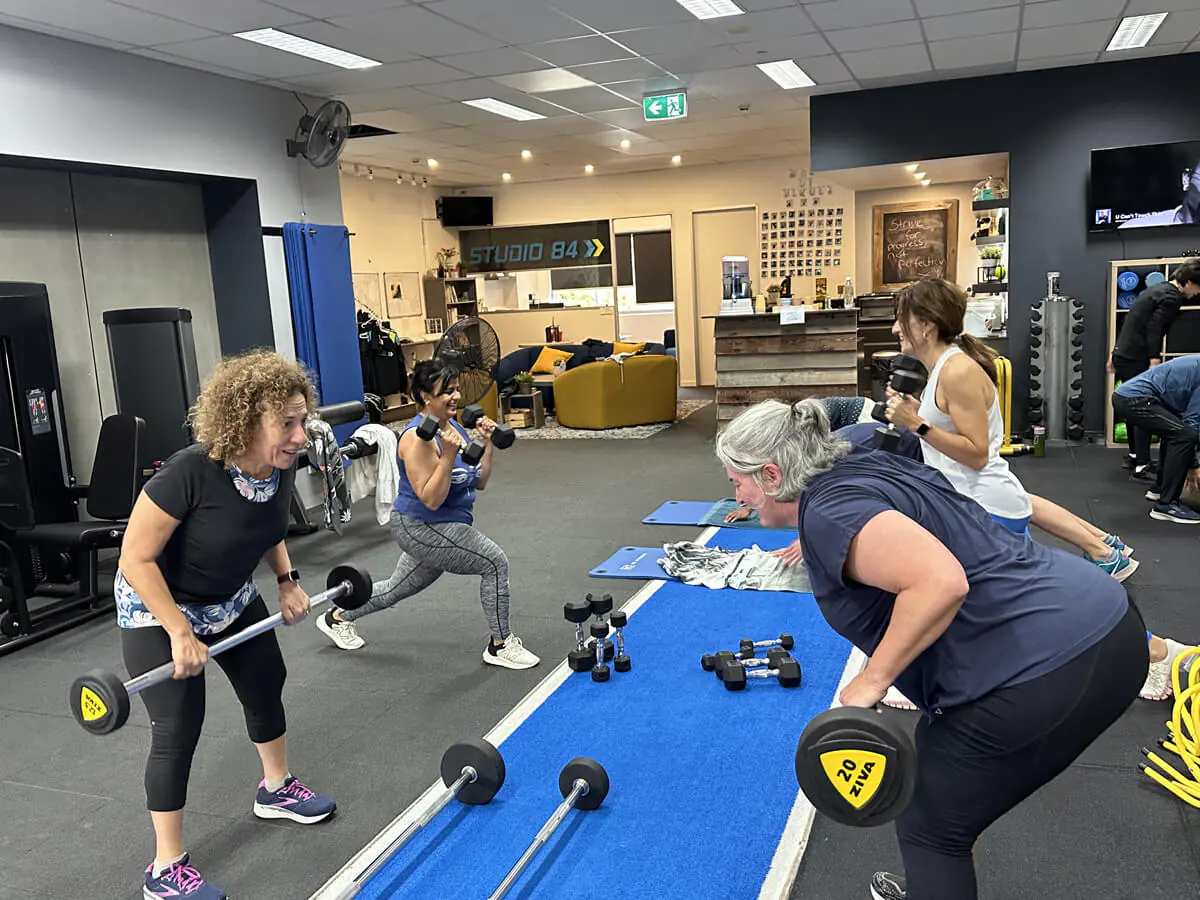
In our Curves & Core and Pilates Pulse classes, we spend a lot of time on exactly this: learning to brace, controlling movement and building strength from the inside out. And because our coaches are watching, you’ll get feedback on whether you’re actually using your core or just going through the motions.
Ditch the hundred crunches. Brace, resist, carry and lift. Your back will feel the difference long before you see it in the mirror.
For the other half of moving well, read Mobility vs Flexibility: What’s the Difference?.