




I’ve lost count of the number of times someone has walked into the studio with a face like thunder because of a number on the bathroom scale.
“I was so good all week, Sam. I’m up a kilo.”
Here’s what I tell them, and what I want you to remember next time it happens to you: the scale is a liar. Well, not quite a liar. It tells the truth about one thing, which is how heavy you are at that exact moment. The problem is we ask it to tell us something it can’t: whether we’re losing fat.
Why your weight jumps around
Your body weight is made up of a lot more than fat. There’s muscle, bone, organs, the food sitting in your gut and, above all, water. And water moves around a lot.
A few of the usual suspects behind an overnight jump:
- Salt. A salty dinner (hello, Friday-night takeaway) makes your body hang on to extra water for a day or two.
- Carbohydrates. Your muscles store carbs as glycogen, and every gram of glycogen is stored with roughly three grams of water. A carb-heavy day can easily show up as extra weight the next morning, without a gram of new fat.
- Hard training. After a tough session your muscles hold extra fluid while they repair. If you’ve just started training or upped the intensity, a little bump is normal.
- Hormones. Many women notice they weigh more at certain points in their menstrual cycle, mostly from water retention.
- Timing. What you’ve eaten and drunk, whether you’ve been to the loo, even the time of day. All of it moves the number.
Put those together and it’s completely normal for your weight to swing a kilo or two from one day to the next. To actually gain a kilo of body fat, you’d need to eat thousands of kilojoules more than your body needs. That doesn’t happen from one dinner.
To gain a kilo of fat overnight, you’d need to out-eat your body by a staggering amount. A kilo of water? That just takes a bowl of ramen.
Look at the trend, not the day
If you like weighing yourself, I’m not going to tell you to throw the scale out. It can be useful, as long as you use it properly.
Weigh yourself under the same conditions each time: first thing in the morning, after the toilet, before you eat or drink. Then stop focusing on any single number. Look at the trend over two to four weeks. If the average is slowly creeping down, you’re on track, even if Tuesday was higher than Monday.
And if daily weigh-ins mess with your head and your mood, weigh in once a week, or not at all. There are plenty of better ways to track progress.
Better ways to measure progress
The scale can’t tell the difference between fat and muscle. When you start strength training, it’s common to lose fat and gain a bit of muscle at the same time. Your body gets smaller and firmer while the scale barely moves. On paper that looks like a failure. In the mirror it looks like a win.
So use some other measures alongside it:
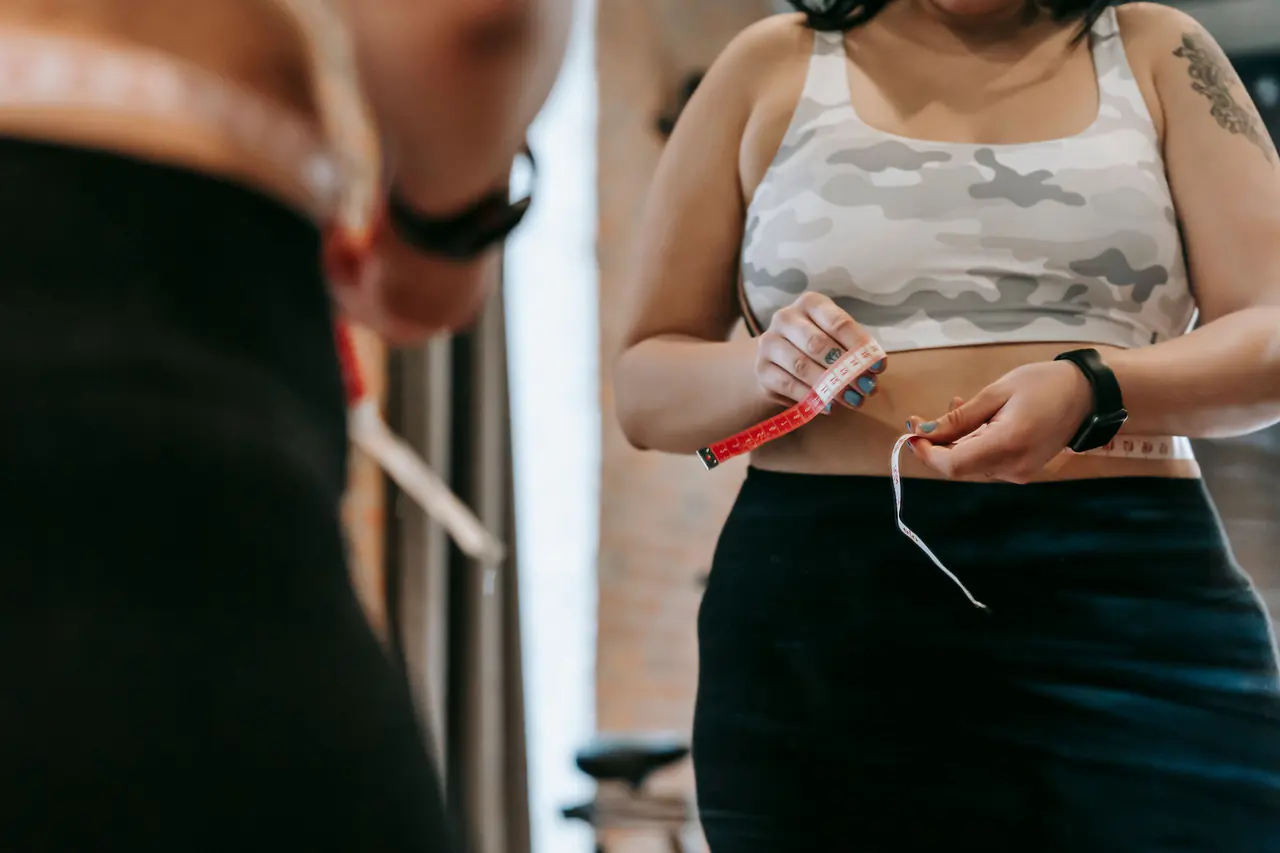
- Waist measurement. Grab a tape measure and check your waist at belly-button height every couple of weeks. A shrinking waist is one of the best signs you’re losing fat, and it’s a useful health marker too.
- Progress photos. Front, side and back, in the same light and the same clothes, every four weeks. Day to day you won’t see a change. Month to month, you will.
- How your clothes fit. That pair of jeans you couldn’t button up in winter is a more honest judge than any scale.
- Strength and fitness. Are you lifting heavier? Getting through the Heroic HIIT intervals with less of a fight? Recovering faster? That’s progress.
- Energy, sleep and mood. Sleeping better, feeling sharper at work, not needing that 3pm sugar hit. These count.
During our 6-Week Challenge we track more than weight, and every single round someone’s scale has barely budged while their waist, their photos and their confidence tell a completely different story.
Set goals the scale can’t ruin
If your only goal is a number on the scale, you’re handing all your motivation to a little machine that can’t tell the difference between fat and last night’s sushi.
Instead, set goals you control and can measure in other ways:
- Train three times a week for the next eight weeks.
- Do your first push-up from your toes.
- Drop a notch on your belt.
- Walk up the stairs at work without stopping.
These goals build the habits that lead to fat loss anyway, and they don’t fall apart because of a salty dinner. I’ve written more about setting targets that actually stick in Realistic Goals.
Be kind to yourself
The worst thing about the scale isn’t that it fluctuates. It’s what we do with the number. One bad weigh-in turns into “what’s the point?” and before you know it, the whole week is off the rails.
Don’t let a number decide how you feel about yourself or your effort. You are not a number, and neither is your progress. If you’ve trained, eaten well most of the time and slept reasonably, you’re doing the work. The results will follow, and they’ll show up in more places than the bathroom.
So step on the scale if you want to. Just don’t believe everything it tells you.
If you’re wondering why you’re training hard and the weight isn’t shifting, read You Can’t Out-Train a Bad Week.