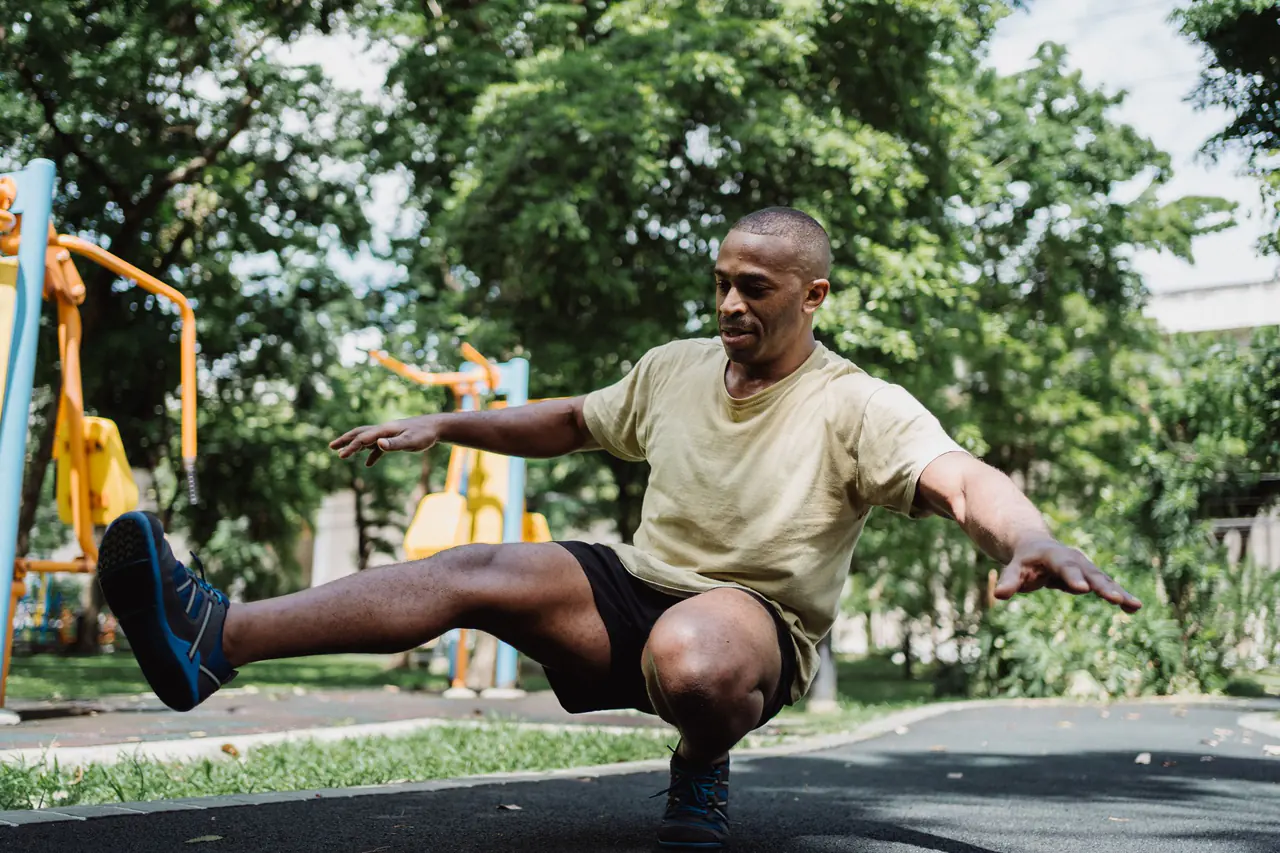
Try this right now. Stand up, take your shoes off, and lift one foot off the ground. Now close your eyes.
How long did you last?
If you wobbled after a few seconds, you’re not alone. Most people are surprised at how quickly their balance falls apart once you take away the easy bits. And that should get your attention, because balance is one of the most underrated parts of fitness.
Use it or lose it
We don’t think about balance much when we’re young. It just works. You can hop down a gutter, step over a puppy and carry a box down the stairs without a second thought.
But balance relies on a whole system working together: your eyes, the balance organs in your inner ear, the sensors in your feet and joints that tell your brain where your body is, and the muscles that react to keep you upright. Like most things in the body, that system gets less sharp if you don’t challenge it. And as we get older, it tends to decline whether we like it or not.
The problem is that we rarely challenge it. We walk on flat footpaths, sit in chairs and hold the handrail. Our balance gets very little practice, so it slowly gets worse.
Why it matters
For older Australians, falls are one of the biggest causes of injury and hospital visits. A fall that a 30-year-old would laugh off can mean a broken hip or wrist later in life, and the recovery from that can take a serious toll on independence.
The good news is that balance and strength training are among the best tools we have for reducing falls. Being able to react quickly when you trip, and having the leg strength to catch yourself, makes a huge difference.
And it’s not just an older person’s issue. Good balance makes you a better athlete at any age. It helps you change direction, land jumps, run on uneven trails and lift with more control. Plenty of ankle sprains and knee tweaks come down to poor balance and control.
Balance isn’t something you either have or you don’t. It’s a skill, and skills get better with practice.
How to train it
The great thing about balance is that you don’t need much equipment or time. A few minutes, a few times a week, done consistently, goes a long way. Here’s how I’d build it.
Start with single-leg standing. Stand on one leg for 30 seconds, then swap. Do it next to a bench or wall so you can grab it if you need to. Once that’s easy, make it harder by closing your eyes, turning your head side to side, or standing on a folded towel or cushion.
Add single-leg strength work. Balance and strength are best mates. Exercises that work one leg at a time build both:
- Step-ups onto a box or bench
- Reverse lunges, holding onto something at first if needed
- Split squats with one foot forward and one back
- Single-leg Romanian deadlifts, reaching forward while the back leg lifts
- Single-leg glute bridges
Practise moving balance. Real life isn’t standing still. Walk heel-to-toe along a line, step over obstacles, try sideways walking and stepping backwards. These train your body to stay steady while it’s moving, which is when most falls happen.
Train your reactions. Once you’re confident, gentle challenges that make you react help a lot. Catching and throwing a ball while on one leg, or having a training partner give you a light, unexpected nudge, teaches your body to recover quickly.
Make it a habit
Balance practice is easy to sneak into your day. Stand on one leg while you brush your teeth. Do a few heel-to-toe steps down the hallway while the kettle boils. Balance on one foot while you wait for the microwave.
These tiny bits of practice add up. You’re giving your balance system the regular challenge it needs to stay sharp. Nobody needs to know you’re doing it, and it costs you no extra time at all.
Footwear plays a part too. Spending some time barefoot at home, where it’s safe, lets the small muscles and sensors in your feet do their job. Thick, cushioned shoes all day long can dull that feedback.
Start safely
If your balance is already a concern, or you’ve had a fall, start very carefully. Always practise near something stable you can hold, keep your area clear of trip hazards, and progress slowly. If you’re getting dizzy spells or your balance has changed suddenly, see your GP before you start, because that needs checking.
How we train it at the studio
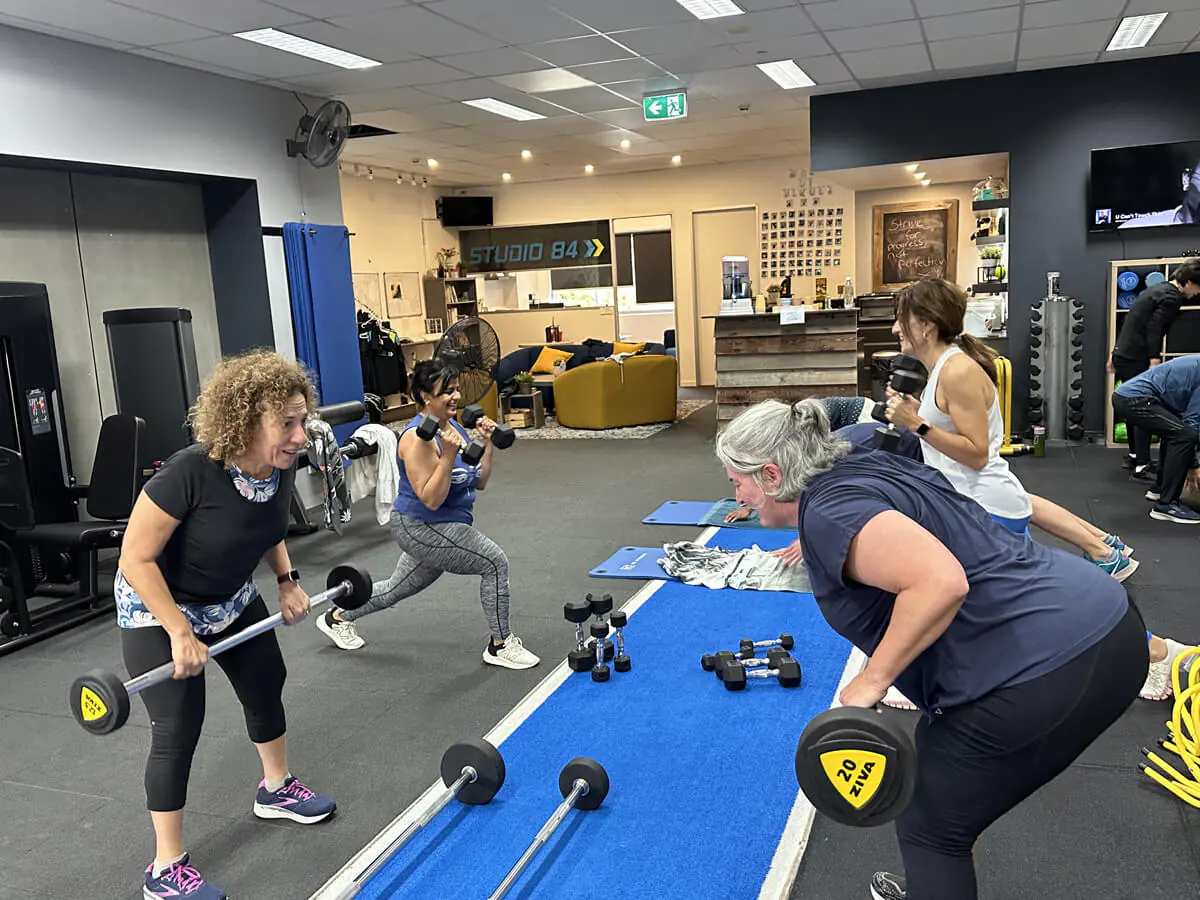
Balance work is built into a lot of what we do at Studio 84. Single-leg exercises turn up in our strength sessions, and our Mobility Moves and Pilates Pulse classes are full of controlled movements that challenge your stability and body awareness.
For our older members especially, we build balance and strength together, because that combination is what keeps you confident on your feet. We’ve watched people who were nervous about stepping off a kerb become steady, strong and sure of themselves.
Test yourself again
Go back to that first test. Stand on one leg and see how long you last, eyes open and eyes closed. Write the numbers down.
Practise a few times a week for the next month, then test again. I’d bet you’ll be surprised at how much better you are. Because balance, like strength, is something you can build at any age. It just needs a little attention, a little often.
If you’re getting started later in life, read You’re Never Too Old to Lift.